
Hair loss in men

25.11.2026
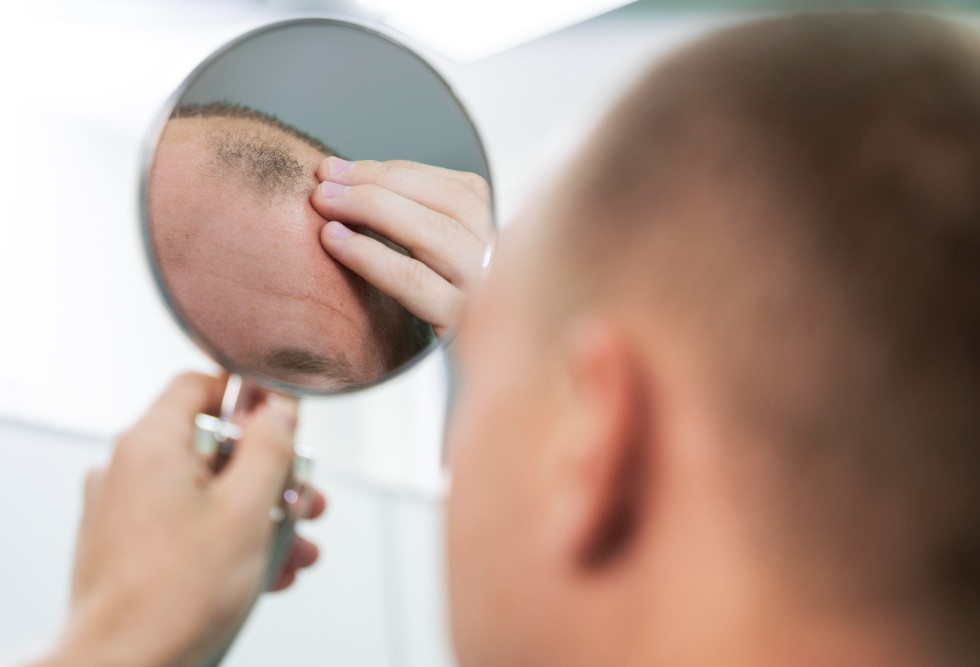
Hair loss is a very common phenomenon among men. For some, it begins as early as youth, while for others, it starts later in life.
It is important to understand that a certain amount of daily hair loss is a normal part of the hair’s life cycle.
A problem arises when hair falls out faster than it grows back, or when the hair becomes noticeably thinner.
What is hair loss?
Every hair has its own life cycle, consisting of a growth phase, a transitional phase, and a resting phase, after which the hair falls out. Subsequently, a new hair typically begins to grow from the hair follicle.
It is normal to lose a certain number of hairs every day. However, if you notice:
• significant thinning of the hair,
• a receding hairline,
• the development of bald patches,
• larger amounts of hair on your pillow, in the drain, or on your comb,
• sudden changes in hair density,
it is worth investigating the cause.
The most common cause in men – heredity
The most frequent form of hair loss in men is androgenetic alopecia, also known as male-pattern baldness.
In this form, the following factors play a significant role:
• heredity,
• genes,
• hormonal influences.
Hair typically begins to thin, most notably:
• at the temples,
• on the forehead,
• at the crown of the head.
For some men, this process develops slowly over many years, while for others, it happens more rapidly.
OTHER POSSIBLE CAUSES OF HAIR LOSS
Stress
Prolonged or intense stress can affect the hair growth cycle. Significant hair loss may occur even several months after a major stressful event.
Nutritional Deficiencies
The body requires sufficient nutrients for normal hair growth. Problems can arise primarily from deficiencies in:
• iron,
• zinc,
• protein,
• vitamin D,
• vitamin B12, and other nutrients.
It is important not to take dietary supplements in large doses without professional guidance; if a deficiency is suspected, it is better to first determine the underlying cause.
Rapid Weight Loss
Highly restrictive diets or rapid weight loss can place stress on the body and affect hair growth.
Illness and Recovery
Certain illnesses, high fevers, or significant physical strain can temporarily disrupt the hair growth cycle.
Medications
Some medications may cause hair thinning or hair loss as a side effect. If you suspect that your hair issues are related to a medication, consult your doctor before making any changes.
Scalp Issues
Inflammation, dandruff, fungal infections, and other scalp conditions can affect the health of your hair. Overly Aggressive Hair Care
Although this is not always the primary cause in men, frequent aggressive styling, chemical treatments, or constant pulling of the hair can contribute to damage and breakage.
WHAT CAN BE DONE?
Ensure a balanced diet
Include the following in your diet:
• eggs,
• fish,
• legumes,
• lean meat,
• green leafy vegetables,
• nuts and seeds,
• fruits and vegetables,
• whole-grain foods.
Reduce stress
The following can help:
• regular physical activity,
• walks,
• sufficient rest,
• relaxation techniques,
• quality sleep.
Care for your hair and scalp gently
• use a suitable, gentle shampoo;
• do not rub the scalp too vigorously;
• avoid excessively hot water;
• limit the frequent use of very hot styling tools;
• dry your hair gently.
Pay attention to sudden changes
If hair loss occurs suddenly, is very pronounced, or if round bald patches appear,
it is advisable to consult a doctor or dermatologist.
Consult a professional
A dermatologist can help determine the type of hair loss and its potential causes. They may examine your scalp and overall health, and, if necessary, suggest further tests or treatment.
WHEN SHOULD YOU TAKE ACTION?
See a doctor if:
• your hair suddenly begins to fall out significantly; • clearly defined hairless patches appear;
• your scalp itches, hurts, or is inflamed;
• you notice significant flaking or changes to the skin;
• the hair loss is accompanied by other health issues;
• the change in your appearance causes you significant concern.
IMPORTANT: DO NOT BELIEVE IN EVERY “MIRACLE” PRODUCT
There are many shampoos, serums, and dietary supplements on the market that promise rapid hair growth. It is important to know that a shampoo alone usually cannot reverse hereditary male-pattern baldness.
The best approach is:
first, identify the cause → then, choose the appropriate solution.
Hair loss in men is common and can have various causes. The most frequent reason is hereditary—or androgenic—baldness; however, hair can also be affected by stress, diet, medical conditions, medications, and scalp issues.
Identifying the cause early is important, as the available courses of action depend on the type of hair loss.
While hair is part of our appearance, its density does not define our worth. Most importantly, we should take care of our health and consult a professional promptly if we notice sudden or significant changes.
💖 💖 💖 💖 💖 💖
You may like these too
Hair loss in men
Hair loss is a very common phenomenon among men. For some, it begins as early as youth, while for ot
25.11.2026

Foods to Include in Your Daily Diet
Food is fuel for our body. By choosing high-quality foods, we can do a great deal every day for our
12.11.2026

The Secret to a Healthy Lifestyle
A healthy lifestyle is not just a one-time decision; it is the way we care for our body, mind, and w
12.11.2026

Simple Ways to Reduce Calorie Intake
Many people believe that losing weight requires eating very little. In reality, what you eat is far
12.11.2026