
Brittle hair

20.08.2025
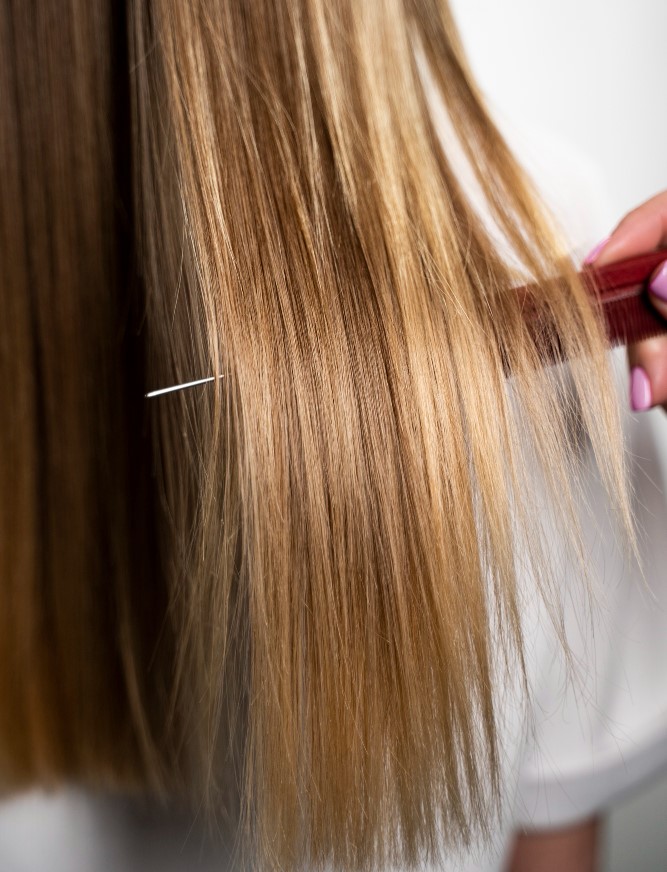
Brittle hair is a common problem that can be caused by a variety of factors – from genetic predisposition, poor care, nutrient deficiencies, to environmental influences and even stress.
Fortunately, with a few changes to your routine and lifestyle, you can significantly improve the health and strength of your hair.
Understanding the causes of brittle and brittle hair
Before we get to the solutions, it’s a good idea to understand what causes brittle and brittle hair:
• Lack of moisture: Dry hair is more prone to breakage because it lacks flexibility.
• Mechanical damage: Frequent combing, pulling, tight hairstyles, rough toweling.
• Heat damage: Excessive use of hair dryers, flat irons and curling irons without heat protection.
• Chemical damage: Coloring, bleaching, perming and other chemical treatments.
• Nutrient deficiency: An inadequate diet that lacks enough vitamins, minerals and proteins.
• Medical conditions: Certain medical conditions (e.g. thyroid problems) or medications can affect hair health.
• Aging: Hair becomes thinner and more brittle as we age.
Key steps to strengthen brittle and brittle hair
Strengthening hair requires a holistic approach that includes proper care, protection and nutrition.
Gentle hair care
• Choose the right products: Use shampoos and conditioners that are specifically designed for brittle and damaged hair. These products are often enriched with proteins (e.g. keratin), ceramides and moisturizing ingredients (e.g. hyaluronic acid, glycerin, natural oils).
• Gentle washing: Wash your hair with lukewarm water and avoid heat. Gently apply shampoo to your hair, wash and rinse, then apply conditioner and leave it in for a few minutes.
• Proper drying: Gently wring out your hair and wrap it in a microfiber towel or old cotton t-shirt instead of rubbing it roughly. This will absorb excess water without damaging the hair cuticle.
• Gentle Detangling: Wet hair is the most delicate. Use a wide-toothed comb or soft-bristled brush and start detangling at the ends and gradually work your way up. Never pull or tug on knots.
Intense Hydration and Repair
• Weekly Hair Masks: Use a deep-conditioning mask at least once or twice a week. Look for masks that contain ingredients like argan oil, shea butter, coconut oil, jojoba oil, honey, or avocado. Leave the mask on for a long time (at least 20-30 minutes or overnight) for maximum benefits.
• Hair Oils: Use natural oils regularly. Before washing your hair, apply a few drops of coconut or argan oil to dry hair, leave it on for at least 30 minutes, then wash your hair as usual. Alternatively, apply a very small amount of argan oil to damp ends after washing for extra protection and shine.
• Leave-in treatments: Use leave-in conditioners or creams that provide continuous hydration and protection throughout the day.
Damage protection
• Minimize the use of heat tools: Let your hair air dry whenever possible. If you use a hair dryer, flat iron, or curling iron, always use a heat protectant spray. Reduce the frequency and temperature of use.
• Avoid tight hairstyles: High, tight buns or braids can cause hair to break at the scalp. Opt for looser hairstyles and use elastics without metal parts.
• Sun and environmental protection: Use hair sprays with UV protection in the summer and wear a hat. When swimming in the pool or sea, wet your hair with clean water beforehand and rinse it off as soon as possible after swimming.
• Silk pillowcase: A silk pillowcase reduces friction between your hair and the pillow, which helps prevent hair breakage while you sleep.
Diet and lifestyle
• Balanced diet: A diet rich in protein, vitamins (especially A, C, E, biotin), and minerals (iron, zinc, selenium) is key to strong, healthy hair. Include plenty of fruits, vegetables, lean meats, fish, nuts, seeds, and legumes.
• Hydration: Drink plenty of water. Dehydration can show up in your hair.
• Supplements: If you’re deficient in certain nutrients, consider taking a hair supplement that contains biotin, collagen, zinc, or B-complex vitamins. Talk to your doctor before taking any supplements.
• Stress management: Chronic stress can affect hair loss and health. Find ways to manage stress, such as yoga, meditation, or nature walks.
Regularly Trimming Your Ends
• Eliminate Split Ends: Regular trimming (every 6-8 weeks) is key to eliminating split ends, which otherwise spread upwards through the hair and cause further damage.
With consistency and patience, you will notice an improvement in the strength and flexibility of your hair. Recovering from brittle and brittle hair is a process that takes time, so be persistent.
You may like these too

Pancakes
What are pancakes? Pancakes are a thin, baked dish made from a liquid batter, usually made from flou
03.09.2026
Eating Right at Work
Eating right at work is key to overcoming those “office biological traps” we talked abou
03.09.2026
Foods that should not be eaten after their expiration date
When it comes to food, it is crucial to distinguish between two labels: “Best before” (q
03.09.2026
Which grains should be soaked before cooking
Soaking foods is not just an old cooking trick from our grandmothers, but a scientifically supported
01.09.2026