
Honey

15.10.2026
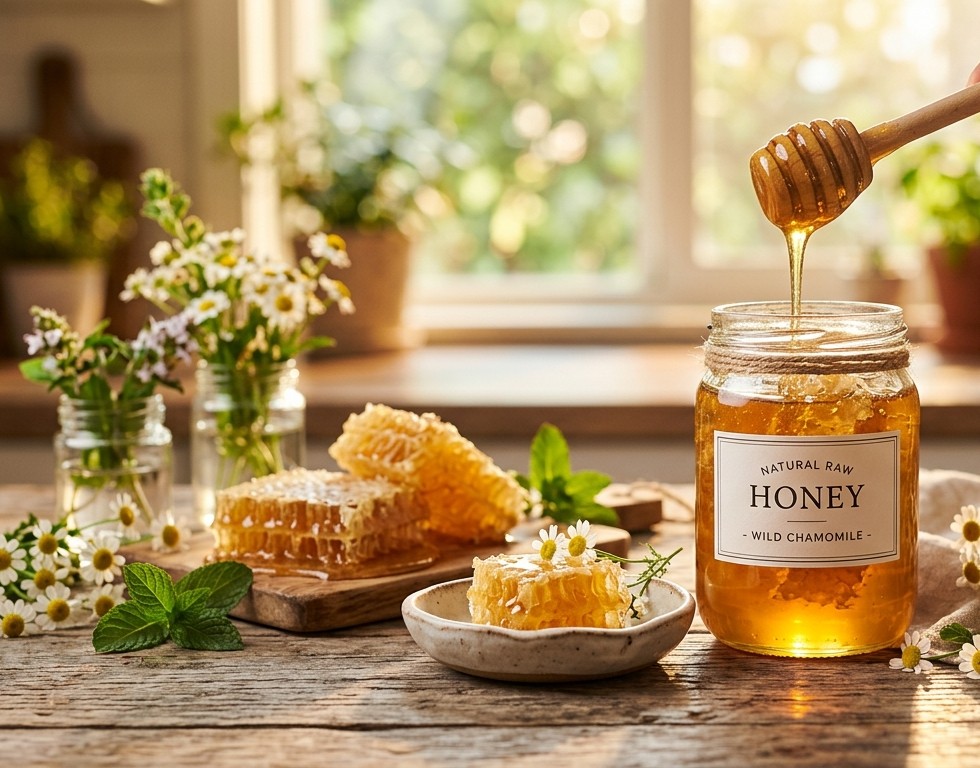
For millennia, honey has been prized as a natural wonder, often referred to simply as “liquid gold.”
It is not merely a delicious natural sweetener but also a highly nutritious food with numerous benefits for health and well-being.
Here is a comprehensive overview of the significance, advantages, and health benefits of honey, along with practical tips and culinary uses.
1. The Importance of Honey and Bees
Honey is the product of a close partnership between nature and bees. By gathering nectar, bees play a vital role in plant pollination, which is crucial for global food production and the preservation of biodiversity.
• Natural Origin: Authentic honey contains only natural sugars, water, minerals, enzymes, and vitamins—without added additives or preservatives.
• Shelf Life: Genuine honey virtually never spoils when stored correctly, as its low water content and high acidity inhibit bacterial growth.
2. Health Benefits and Advantages of Honey
Honey contains over 180 different substances, including antioxidants, enzymes, minerals (iron, calcium, potassium, magnesium), and B-group vitamins.
• Potent Antioxidant Effect: It contains flavonoids and phenolic acids that help neutralize free radicals and protect cells from damage. • Relief for colds and coughs: It has a soothing effect on the throat and pharynx and alleviates dry or irritating coughs (especially effective before bedtime).
• Antibacterial and antiseptic properties: The enzyme glucose oxidase in honey produces small amounts of hydrogen peroxide, which inhibits bacterial growth. This is why specialized honey (e.g., Manuka) is used for healing wounds and burns.
• Digestive support: It acts as a mild prebiotic by nourishing beneficial gut bacteria.
• Quick energy source: Thanks to the natural combination of fructose and glucose, it provides a rapid yet sustained energy boost without sudden drops in blood sugar.
3. Practical tips for use and storage
⚠️ Important warning: Never give honey to infants under 1 year of age, as there is a risk of developing infant botulism.
How to store honey properly:
• Store it in a tightly sealed glass jar in a dark, dry place at room temperature (18–20°C).
• Do not expose it to direct sunlight or high heat.
Quality and crystallization:
• Crystallization is a natural process and proof that the honey is genuine and unprocessed.
• If the honey hardens, simply place the jar in a container of warm water (up to 40°C). Keeping the water temperature below 40°C preserves all the beneficial enzymes and vitamins.
• The warm beverage rule: Do not add honey to hot tea or milk—wait for the drink to cool down slightly.
🌸 🌸 🌸 🌸 🌸 🌸
You may like these too
Honey
For millennia, honey has been prized as a natural wonder, often referred to simply as “liquid
15.10.2026
Millet
Millet, derived from millet, is an ancient grain that has recently gained popularity due to its many
14.10.2026
Persimmon
Persimmon, often called “food of the gods” (from the botanical name Diospyros kaki), is
12.10.2026
How to get rid of visceral fat?
Getting rid of visceral fat (the fat around your internal organs) is crucial, as this type of fat is
12.10.2026