
Healthy diet for children in summer

22.07.2026
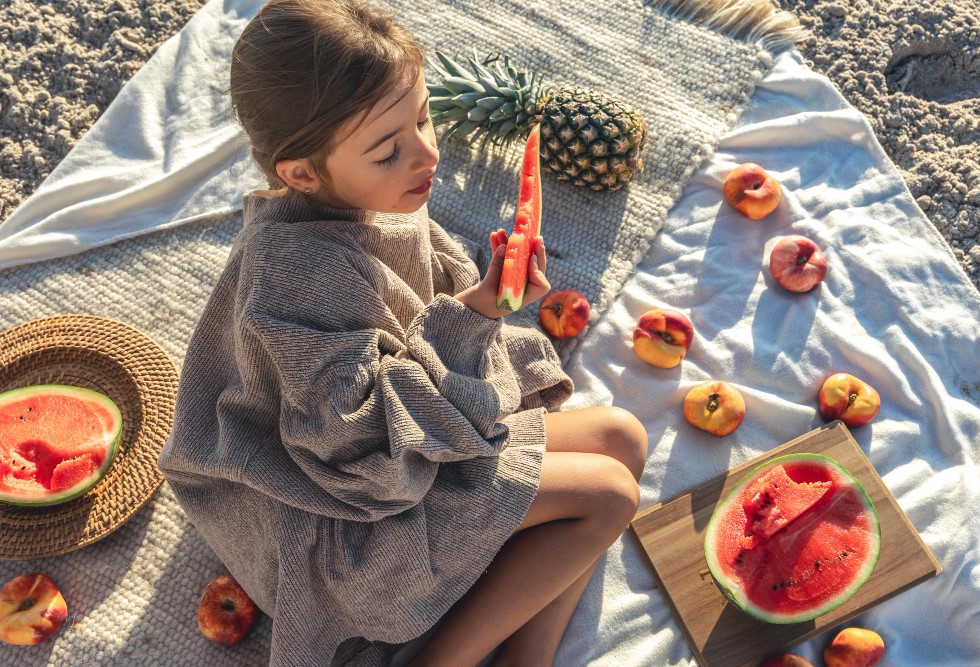
In summer, children need a light, varied and nutritious diet that provides enough energy, vitamins, minerals and fluids.
Due to high temperatures, it is important that meals are less fatty, rich in fresh fruit and vegetables and that the child drinks enough water during the day.
Basic recommendations
• Offer 4-5 small meals a day.
• Make sure to drink water regularly; sugary drinks should be an exception.
• Include seasonal fruit and vegetables every day.
• Choose whole grains, legumes and quality proteins.
• Limit sweets, salty snacks and fast food.
Recommended foods
Fruit
• watermelon
• cantaloupe
• peaches
• apricots
• plums
• strawberries
• raspberries
• blueberries
• apples
Vegetables
• tomatoes
• cucumbers
• peppers
• carrots
• zucchini
• lettuce
• broccoli
Protein foods
• lean chicken and turkey meat
• fish (salmon, trout, sardines)
• eggs
• cottage cheese
• yogurt
• legumes (beans, lentils, chickpeas)
Carbohydrates
• whole grain bread
• oatmeal
• rice
• potatoes
• whole grain pasta
Healthy fats
• olive oil
• avocado
• nuts and seeds (for older children, taking into account the risk of choking in younger ones)
Sample daily menu
Breakfast
• Oatmeal with yogurt, blueberries and peach.
Morning snack
• Watermelon or apple.
Lunch
• Roast chicken, boiled potatoes and a large mixed salad.
Afternoon snack
• Plain yoghurt with raspberries or cottage cheese with fruit.
Dinner
• Wholemeal bread with cottage cheese and tomatoes or vegetable soup.
Hydration
In summer, children lose more fluid through sweating, so it is important to:
• drink water several times a day,
• offer unsweetened tea or water with slices of lemon or mint,
• replace lost fluids after sports or outdoor play.
Helpful tips
• Store food in the refrigerator and do not leave perishable foods in the heat.
• Wash fruits and vegetables thoroughly before eating.
• Use cooler bags for dairy products, meat and other perishable foods at picnics.
• Encourage your child to try different types of fruit and vegetables and participate in meal preparation.
A healthy summer diet should be based on fresh seasonal foods, sufficient fluid intake, and balanced meals.
Such a diet provides the child with energy for play, supports growth and development, and helps maintain well-being even on hot summer days.
You may like these too
Honey
For millennia, honey has been prized as a natural wonder, often referred to simply as “liquid
15.10.2026
Millet
Millet, derived from millet, is an ancient grain that has recently gained popularity due to its many
14.10.2026
Persimmon
Persimmon, often called “food of the gods” (from the botanical name Diospyros kaki), is
12.10.2026
How to get rid of visceral fat?
Getting rid of visceral fat (the fat around your internal organs) is crucial, as this type of fat is
12.10.2026